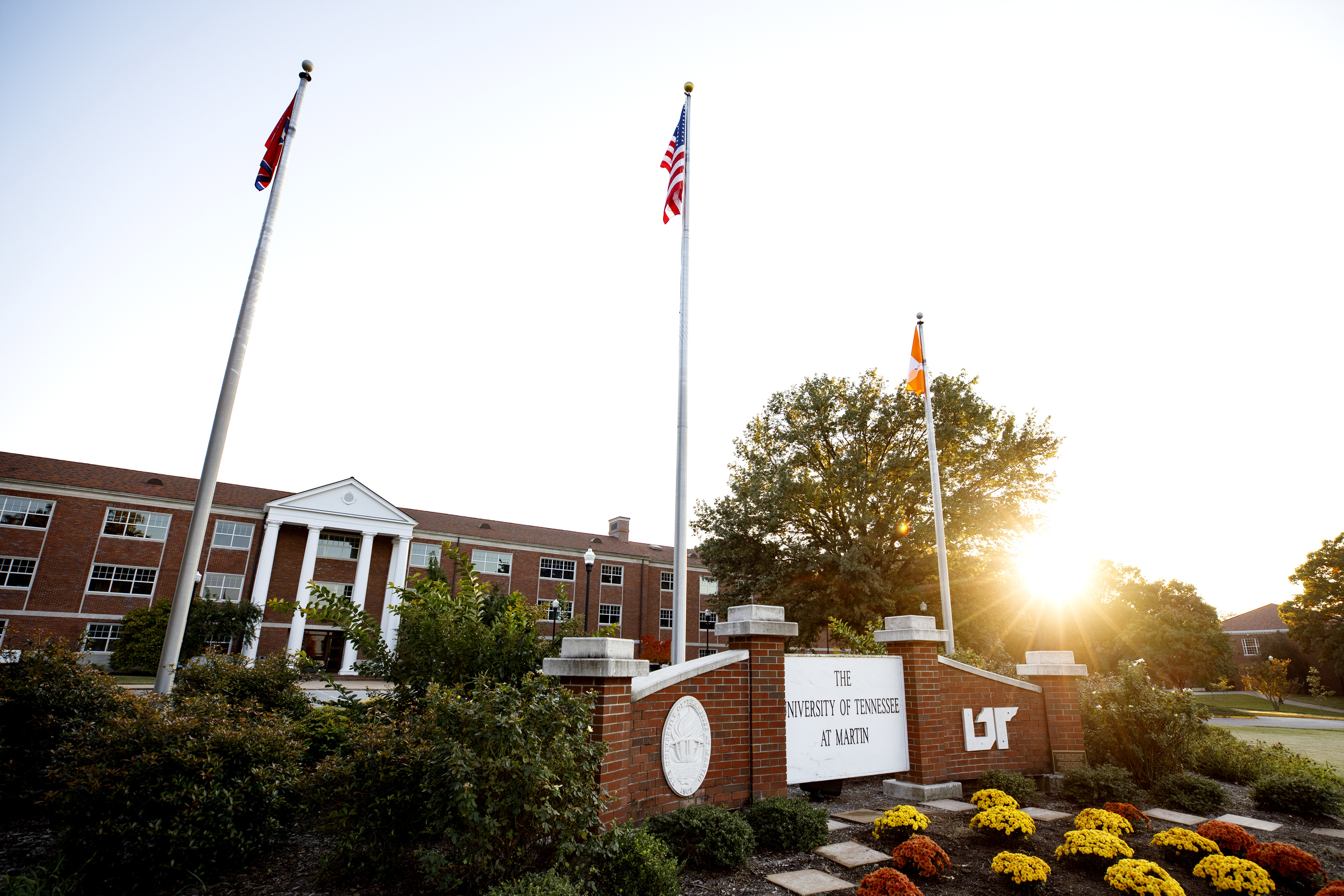
The following grant opportunities that might be of interest to UT Martin staff and faculty have been provided by the Office of Research and Sponsored Programs.
The ORSP can be contacted for assistance in applying to any of these programs or for information regarding funding ideas. Information about the ORSP can be found at www.utm.edu/orsp.
• Creating Healthier Rural Communities Through the End Zone for Chronic Disease Prevention request for application, sponsored by the Tennessee Department of Health.
This procurement opportunity supports rural and suburban Tennessee communities in implementing evidence-based policy, systems and environmental strategies that improve healthy food access, physical activity spaces and social connection. Its goal is to reduce chronic disease burden and improve long-term population health through sustainable, community-driven projects aligned with local priorities and partnerships.
Maximum grant amount: Up to $300,000 per year, per county, for Category A applicants, and $200,000 per year, per county, for Category B applicants.
Performance period: Oct. 1, 2026-Sept. 30, 2031.
Deadline: Monday, July 6, at 2 p.m.
Additional information at Tennessee Department of Health Procurement Opportunities under “Rural Health Transformation” tab.
• Academic Research Enhancement Award for Undergraduate-Focused Institutions – sponsored by the National Institutes of Health.
The National Institutes of Health (NIH) is continuing to make a special effort to stimulate research at educational institutions that graduate baccalaureate students who go on to become the nation’s research scientists, but that have not been major recipients of NIH support. This Notice of Funding Opportunity (NOFO) aims to support biomedical research projects proposed by faculty members at undergraduate-focused institutions that do not receive substantial funding from the NIH.
NOFO objectives: Provide support for meritorious research at undergraduate-focused institutions or institutional components; strengthen the research environment at these institutions/components; and give undergraduate students an opportunity to gain significant biomedical research experience through active involvement in the research.
Applicants may request up to $375,000 in direct costs, excluding consortium facilities and administration costs, for the entire project period of up to three years.
Application deadline: Sunday, Oct. 25.
Additional information: PAR-24-152: Academic Research Enhancement Award (AREA) for Undergraduate-Focused Institutions (R15 Clinical Trial Not Allowed).
• Shared Instrumentation Grant (SIG) Program – sponsored by the National Institutes of Health.
The objective of the Shared Instrumentation Grant (SIG) Program is to make high-priced research instruments available to institutions that can only be justified on a shared-use basis and that are needed for NIH-supported projects in basic, translational or clinical biomedical and biobehavioral research. The SIG Program provides funds to purchase or upgrade a single item of expensive, state-of-the-art, specialized, commercially available instrument or an integrated instrumentation system. An integrated instrumentation system is one in which the components, when used in conjunction with one another, perform a function that no single component can provide. The components must be dedicated to the system and not used independently.
Minimum award: $50,000. There is no maximum price limit for the instrument; however, the maximum award is $750,000.
Application deadline: June 1, 2027.
Additional information: PAR-24-265: Shared Instrumentation Grant (SIG) Program (S10 Clinical Trial Not Allowed).